Sunday- Thursday9AM - 5PM
OfficesSwaifeya , Princess Taghreed St. Saed Complex #14 3rd floor office #301
We are a company specialized in the field of consulting, company evaluation and training to meet the specific needs of companies since 2012. We work in partnership with our clients to provide:
QMS- Quality Management System
It is a formal system developed to document processes, procedures and responsibilities to achieve quality policies and quality objectives according to specifications and standards of ISO 9001 and other similar systems. The QMS also helps in coordinating and directing the activities of commercial organizations and companies to meet customer requirements and improve efficiency and effectiveness on an ongoing basis.
The European international standard ISO 9001: 2015, affiliated with the International Organization for Standardization, is the most prominent approach ever that defines the requirements for a quality management system, while the use of ISO 9001 specifications is done through a set of documents that include details about the quality management system. In fact, the ISO 9001 documents are It is only a description of the system and cannot be used as an administrative system document. The quality management system serves many purposes within companies and businesses, including the following:
The importance of implementing a quality management system (QMS).
We create a QMS system. We specialize in the field of consulting
Other quality standards related to the quality management system
ISO 9000, ISO 9004, ISO 14000 for Environmental Management System, ISO 13485 for Quality Management System for Medical Devices, ISO 19011 for Audit.
Quality management system requirements
ISO 45001 overview
ISO 45001:2018 is the most recognized international standard for occupational health and safety. This helps your company demonstrate commitment to protecting employees and visitors from accidents and illnesses in the workplace.
Whereas, according to the International Labor Organization, there are more than two million deaths resulting from work-related accidents or diseases every year; There are more than five thousand deaths every day from all over the world. .
Companies of all sizes use this framework to build or enhance solid occupational health and safety programs.
In addition to their health and safety concerns, organizations will consider what local communities, governments and stakeholders expect of them in relation to workplace health and safety.
The aim is to reduce unacceptable risks and ensure the safety and well-being of everyone involved in the organization’s activities.
ISO 45001
ISO 27001
is suitable for any organization, large or small, in any sector or part of the world where confidential company information is managed and kept secure. Proper information protection is crucial, as is the case in the finance, health, public sector and information technology sectors.
. , which is the high-level structure used by all new standards
ISO 27001 Advantages
ISO 50001:2018
ISO 14001
ISO 14001Advantages
ISO 22000
• Allows for easy adoption and integration of your existing ISO management systems and provides greater efficiency in maintaining and auditing your system.
The importance of implementing quality systems and obtaining ISO accreditation
Procedures and conditions for obtaining the international ISO Certification
|
Quality Management Standard (QMS) according to ISO 9001
|
The most common specification relates to the application of quality standards in all processes and activities to raise the organization’s ability to provide high-quality services and products. It is required by many large companies to register suppliers as a basic condition for accepting the supplier, and many countries also require it to accept exports to them
|
|
EMS environmental management standard according to ISO 14001
|
It relates to the application of environmental compliance standards within the institution to ensure control of all sources of danger and pollution, ensuring that the institution does not harm the internal and external environment, and helping the institution to analyze environmental aspects and their resulting effects and develop the necessary programs to eliminate sources of danger.
|
|
Food Safety Management Standard (FSMS) according to ISO 22000
|
It relates to the application of food safety and HACCP standards, risk analysis, and control points in order to ensure the safety of food and its freedom from pathogens and contamination, and to increase the institution’s ability to provide safe food. It is applied to all institutions located within the food chain.
|
| Health and Safety Standard (OSHA ) 45001
|
It relates to the application of occupational safety and health requirements to control the risks present in the institution that may threaten the safety of workers, buildings and their surroundings, prepare for and respond to emergency situations, and how to act properly and orderly in the event of emergency situations.
|
| EnMS energy management specification according to ISO 50001
|
Related to implementing energy management and rationalization requirements, developing mechanisms and programs that help save energy, measuring the success of these programs, and following up on their implementation and commitment to them.
|
| Information Security Management Standard (ISMS) according to ISO 27001
|
It relates to the requirements for the security and confidentiality of information and preserving it from loss, damage, or penetration. It is concerned with all sectors that possess sensitive data, fear it will be lost, and want to prove to their customers that their data is safe and protected.
|
| Quality management specification for industries and medical devices according to ISO 13485
|
It relates to the application of quality requirements in the manufacture of medical devices and supplies that are used in the medical field to ensure compliance with legal requirements and legislation and to ensure that the devices and supplies are free of infection causes.
|
| Business Continuity Management (BCMS) specification according to ISO 22301
|
It relates to the application of business continuity requirements to prepare the organization to create, implement and maintain a business continuity system that helps it prepare for and respond to emergency situations and develop recovery plans to quickly emerge from crises and disasters.
|
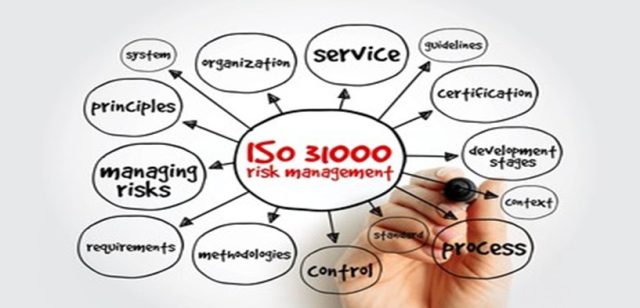
| Business risk management standard according to ISO 31000
|
It relates to applying the requirements of a management system, identifying and analyzing risks, and developing plans and procedures to deal with those risks
|
| Specification for the management of educational organizations according to ISO 21001
|
It relates to applying the management requirements of educational organizations and educational service providers and how to manage the system in an integrated manner that helps increase the quality of service provided and good management of resources
|
| Customer satisfaction management standard according to ISO 10002
|
It relates to implementing the requirements for managing customer satisfaction and complaints and how to deal with them from the beginning of their receipt until their resolution and setting relevant procedures and instructions to improve customer satisfaction and reduce customer complaints.
|
| Social responsibility management specification according to ISO 26000
|
Relates to the application of international standards on social responsibility with the aim of contributing to global sustainable development, by encouraging businessmen and other institutions to practice social responsibility to improve their impacts on their workers, their natural environments and their communities
|
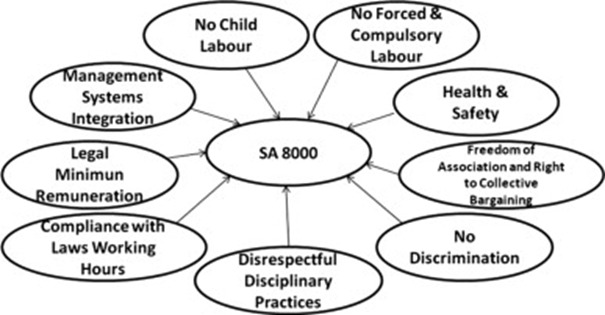
| Social responsibility management standard according to 8000
|
Relates to the application of social responsibility requirements to encourage organizations to develop, maintain and apply socially acceptable practices in the workplace
|
| Specification for quality management in projects in accordance with ISO 10006
|
It relates to applying quality management requirements in projects and how to control and monitor projects, control their outputs, and manage them optimally
|
| Specification for applying ISO 9001 in local administrations (municipalities, secretariats…etc.) in accordance with ISO 18091.
|
Related to the application of the ISO 9001 specification for the quality management system in government departments and developing the optimal method for its application in those entities.
|
| Facilities management standard ISO 41001
|
It relates to the application of the ISO 41001 specification for the facilities and facilities management system and how to achieve the efficiency and effectiveness of facilities management
|
| Anti-corruption and bribery management specification ISO 37001
|
Related to the application of ISO 37001 to establish systems and procedures to confront and combat corruption and bribery in government and private agencies.
|
| ISO 29990 specification for the management of education and training service providers
|
Related to the application of the ISO 29990 standard and the development of a documented framework of good practices for education and training service providers to achieve the quality and efficiency of education and training outcomes.
|
| Laboratory quality and efficiency system specification ISO 17025
|
Related to implementing the requirements of ISO 17025 to build an effective quality management system for measurement and calibration laboratories to ensure the accuracy of results, whether in measurement or calibration.
|
| ISO 17020 conformity assessment specification for examination and inspection bodies
|
Relating to the application of the requirements of the ISO 17020 specification regarding conformity assessment for examination and inspection bodies wishing to obtain international accreditation.
|
| ISO 37301 Compliance Management System Specification
|
Related to the application of ISO 37301 to build a compliance management system with the laws, legislation and regulations governing organizations and institutions to detect any cases of violation of the regulations and legislation regulating work.
|
| ISO 17024 conformity assessment specification for individual certification bodies
|
Relating to the application of ISO 17024, which is concerned with conformity assessment for individuals’ certification bodies wishing to obtain international accreditation.
|
To help obtain the ISO certificate
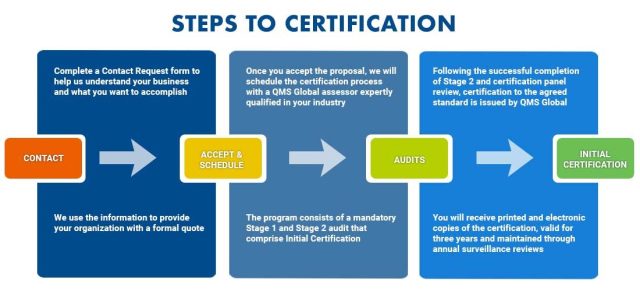
At Creativity Sources Company, we seek to serve you, assist you, and provide the necessary advisory services to apply the standards and requirements for obtaining the ISO certificate. Our experts carry out all advisory and training services to qualify and train human resources and build a documented system compatible with ISO requirements until obtaining the certificate through the following steps:
The most widespread international accreditations in the world
Primary, secondary and higher education institutions educate children, adolescents and adults to help them learn skills vital for the workforce. However, school systems struggle to provide these key skills due to a lack of infrastructure to support sustainable growth and developments like new technology.
ISO certifications for the education industry help school systems navigate a complex and competitive environment by addressing their challenges. IMD is experienced in the education sector and can assist clients in the industry by implementing education industry standards.
How is ISO Certification helpful for Educational industries?
ISO certifications are helpful for almost every organization regardless of its size, type, or process. ISO Standard for education guarantees that every educational organization or management system has all the requirements for standardization, quality assurance, and consistency. ISO Certification for educational institutions, schools, and colleges is helpful for the educational system because it helps in the improvement of your management quality, efficiency, builds international credibility, streamlines your organizational operation, and so on.
Why does the Education sector need ISO Certification?
Education is the fundamental need for all learners in the world. It is one of the most competitive sectors in the world. All the learners in the world want a quality-based education system for their holistic development. So, any educational organization needs to achieve ISO Certification for ensuring the learners that they will get the expected quality based education with effective and efficient processes. ISO Certifications will give you the confidence in delivering educational services that meet the requirements of the standard. Therefore, ISO Certification for Education Industry is highly needed. for the education sector is very much profitable. Some of the primary profits of achieving ISO Certificate for educational industry are listed below:
ISO Certification for educational institutions, schools, and colleges encourages equal opportunities for all learners in spite of their culture, religion, caste, class, ethnic identities, gender, or physical ability/disability.
• ISO standard for the education sector is very profitable because it assesses and identifies all the risk-related to your processes or system and finds a way to mitigate them from your organization.
• ISO certification is widely accepted in educational institutions or industries as it makes your education more accessible to learners in the field of education.
• ISO Certification for Education industry helps the educational institutions, schools, and colleges to enhance their management system by intensifying their reputation in the field of education.
• ISO standard for education also helps your organization to stimulate innovative and creative methods for the learners.
Which standards or ISO certificates are required for the Education?
ISO Certification for Education Industry can be extremely beneficial in providing a world-class teaching and learning experiences to the learners. The general standards for educational industries are ISO 9001, ISO 14001, ISO 45001 and the required standard for Education industries is ISO 21001. Let us understand these standards in details:
• ISO 9001: ISO 9001 is a quality management systems standard that helps organizations have meaningful management structures and meet or exceed quality control metrics. Education systems benefit from this standard because it improves student and faculty satisfaction, operational processes and efficiency and helps you meet your overall goals. The framework is flexible so each education system can adapt it to its methods and processes, ISO 9001 standard for education sector ensures to fulfil learner’s expectations and encourages continuous development to meet the rapidly changing demands of the learner in the educational sector.
• ISO 14001: ISO 14001 is the standard for environmental management systems. It gives requirements for organizations to follow when creating and maintaining their environmental management systems. For education systems, ISO 14001 helps you manage your environmental impact, including resource management, pollution prevention and culture change. ISO 14001 certification shows you care about your environmental performance and are actively managing it, This ISO Certification for Education Industry helps your organization to ensure the customers that your processes meet all requirements for a safe and healthy environment. It ensures that learners will learn in an environment-friendly setting
• ISO 45001: ISO 45001 is an international standard for occupational safety and health. Its requirements help organizations avoid factors that can cause harm, which protects people from accidents and diseases. Education systems with ISO 45001 certification foster a healthy and safe environment for students and staff. By reducing the chances of injury or illness, you help students and staff avoid absences.
• ISO 21001 is an international standard developed by the International Organization for Standardization which provides management tools for organizations that offer educational products and services. It intends to help educational providers meet students requirements and needs. SO 21001 is based on ISO 9001 – Quality Management Systems, but it provides a specific framework for educational organizations that aim to enhance the satisfaction of their learners by improving the educational processes and ensuring conformity to learners’ requirements. The standard can be applicable to all organizations that provide a curriculum for the development of knowledge, skills and attitudes by means of different lecturing methods.
• ISO 29993:2017 – Learning Services Outside Formal Education: This certification acknowledges your institution’s excellence in delivering learning services outside the formal education system. It validates your institution’s ability to provide high-quality educational programs tailored to meet the diverse needs of learners in various contexts.
• ISO 29994:2021 Education and learning services: Requirements for distance learning: ISO 29994 sets specific requirements for distance education, promoting transparency and instilling confidence in learners. By obtaining ISO 29994 Certification, institutions empower students to choose degrees and areas of expertise confidently, knowing they are receiving a quality education.
• ISO/IEC 40180:2017 IT for Learning, Education, and Training: ISO/IEC 40180 provides the fundamentals and reference framework for quality assurance, quality management, and quality improvement in IT-enhanced learning, education, and training (commonly known as E-Learning). This certification focuses on ensuring quality throughout the entire e-learning process, from content development to learner assessment.
• PAS 2060: PAS 2060 verifies that organizations are implementing practices for carbon neutrality and helps them achieve carbon neutrality. It is the only internationally recognized standard for carbon neutrality. Education systems follow four stages — measurement, reduction, offsetting and documentation — before becoming verified. PAS 2060 increases the transparency of environmental policies, improves your institution’s reputation for environmental consciousness and helps reduce greenhouse gas emissions.
• ISO 27001: ISO 27001 improves the integrity, availability and confidentiality of information security management systems. Education systems can protect sensitive data, such as the personal information of students and staff, from cyberattacks, data breaches, damage and theft. You can avoid threats and security incidents while maintaining compliance.
As a result, students and staff can be confident their data is secure, and your reputation will improve. ISO 27001 does not cover General Data Protection Regulation (GDPR).
•ISO 50001: ISO 50001 is an energy management standard that helps organizations improve their energy efficiency. Education systems should get ISO 50001 certification to manage their energy consumption and related costs. It can help schools meet regulatory and legislative requirements, reduce their operating costs and carbon footprint and improve their resource management. Getting certified for ISO 14001 first makes ISO 50001 certification easier to achieve.
ISO Certification process for Education sector
• Application & contract
• Audit team Assignment
• Document view
• Certification Audit Independent review
• Notification of Certification
• Surveillance audit
• Re-Assessment